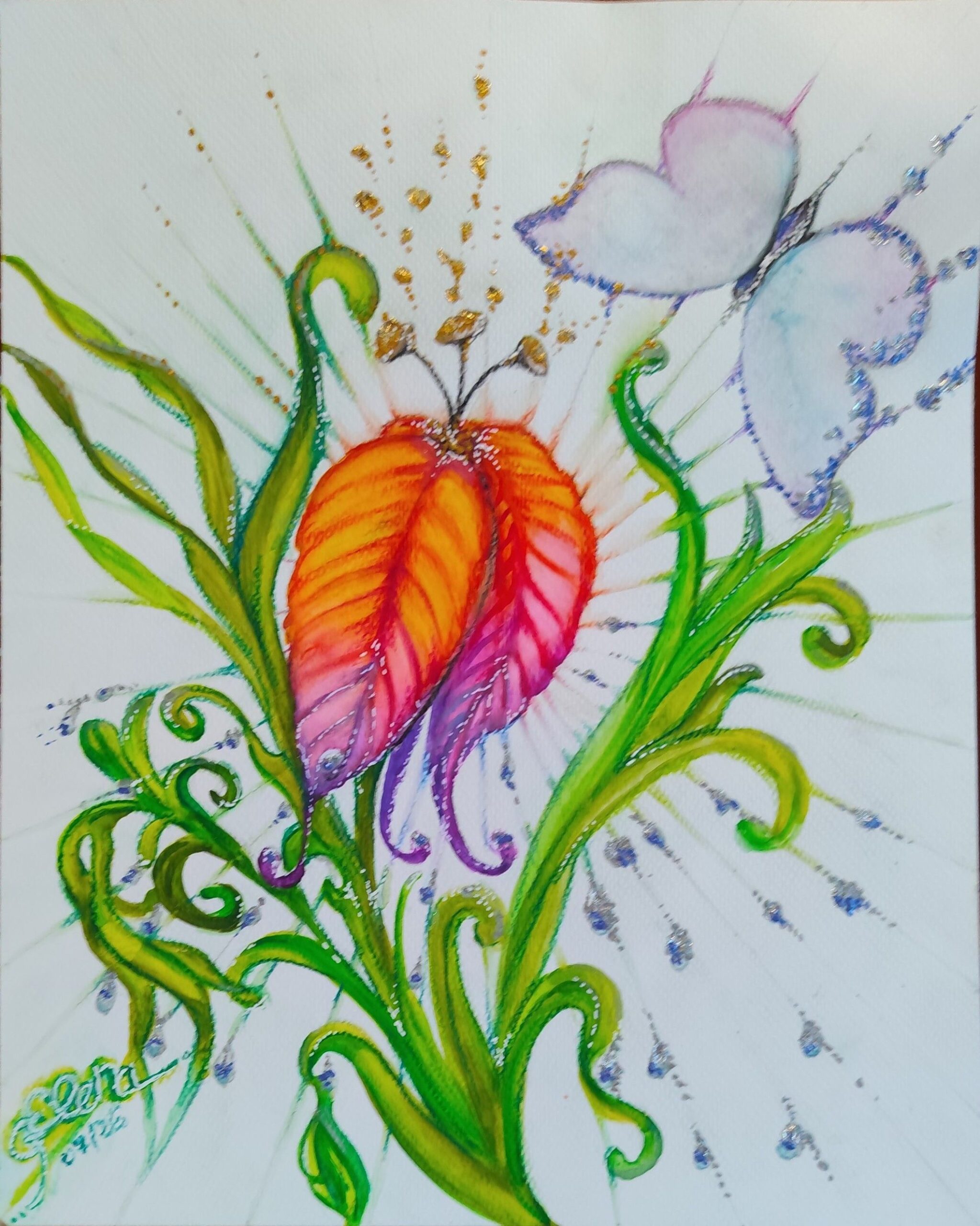
"Imaginary Flower of My Dream" blooms where the laws of reality come to an end and the world of dreams begins. Here, imagination is no longer bound by familiar forms. The flower radiates as if woven from light, its petals resembling both flames and living leaves, while elegant green tendrils unfold into an endless ornamental pattern that continues to grow within the dream itself.
The painting enters into a quiet dialogue with Francisco Goya's famous print "The Sleep of Reason Produces Monsters." Yet here, sleep becomes the source of an entirely different power. As reason rests, it is not fear that emerges, but beauty. The subconscious creates an impossible flower that exists only in the realm of dreams—a place where light overcomes darkness and imagination surpasses logic.
Transparent watercolor washes, delicate color transitions, and shimmering decorative accents enhance the feeling of lightness and inner radiance. The white background does not simply surround the flower—it allows it to become the source of light itself, reminding us that the most extraordinary visions are sometimes born while we dream.