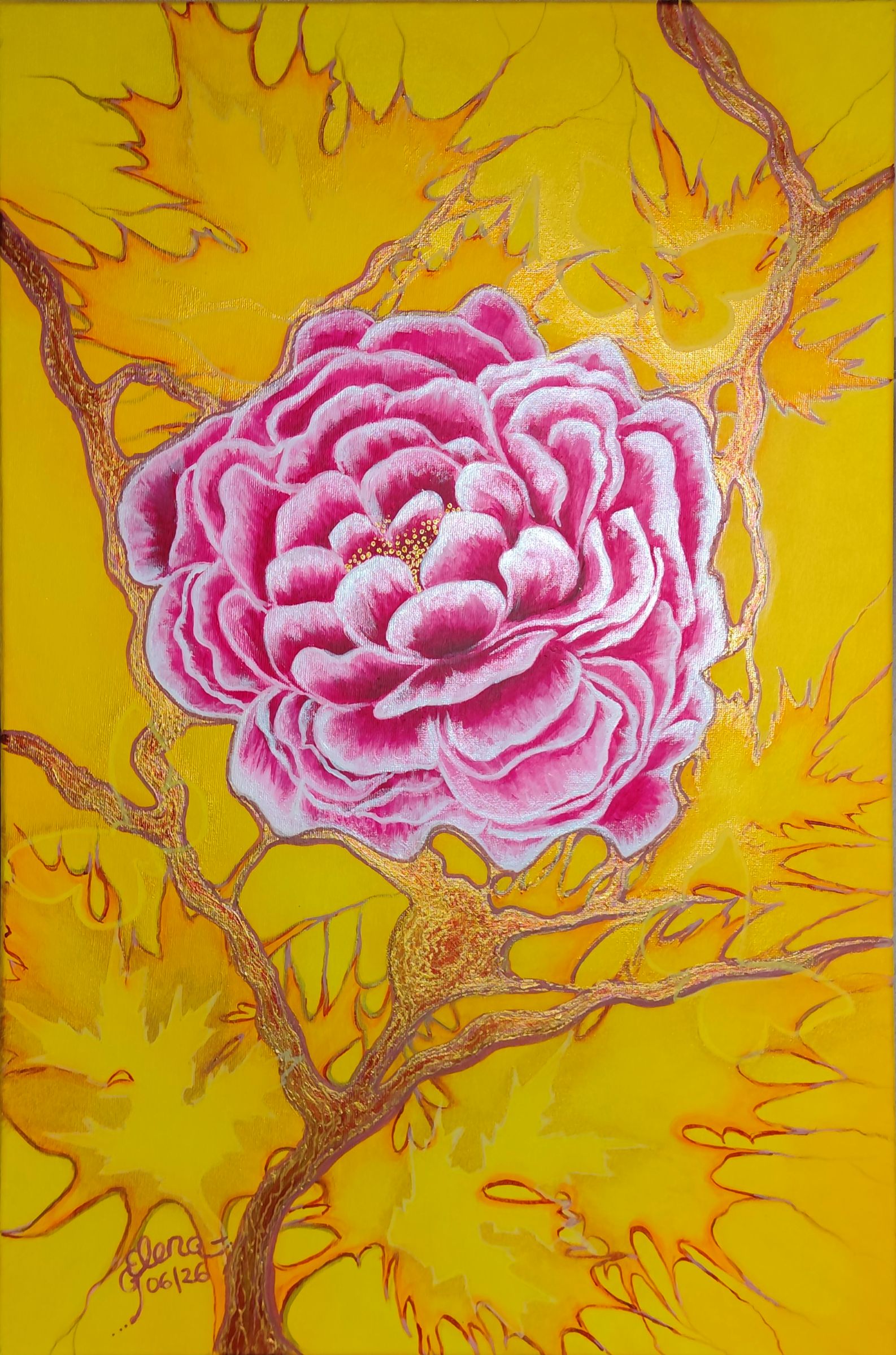
This work turns to the image of the botan — the peony, which in Japanese culture symbolizes nobility, prosperity, inner strength, and refined beauty. In traditional Japanese art, the botan is often called the “king of flowers,” uniting luxury and fragility, earthly sensuality and spiritual harmony.
The rich pink-crimson petals seem to radiate light from within, while the luminous golden-yellow background fills the space with warmth and an almost sacred glow. The twisting branches recall the flowing lines of Japanese woodblock prints and become a symbol of life’s path — complex, winding, yet enduring. Transparent silhouettes of leaves create the feeling of nature’s memory and the passing of seasons, against which the botan appears as the embodiment of full bloom — a moment both fleeting and eternal.
“Botan” becomes an image of harmony, dignity, and the strength hidden within softness.